Evan's, Ivan's, Ricky's and Tommy's
WILLIAMS-REHAB CENTER 🍺
/
Brewing/
Menu/
ReferencesBlog 6: SAVING FAMINE (Starch Beverage)
Research by Ricky
Starch
The main ingredient of “Saving Famine” is starch, with a chemical formula of (C6H12O5)n. This beverage’s fermentation process produced 0 mL of CO2 Its alcohol content was measured to be between 0 to 1% (although closer to 0% than 1%). This drink is a cloudy, white color color and smells very fragrant (foul).
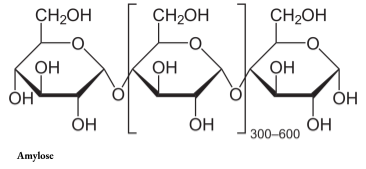
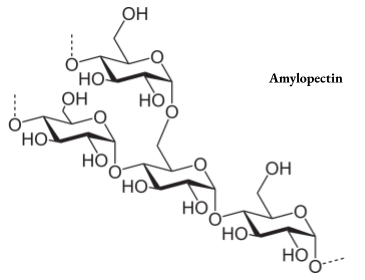
Starch is composed of two different structures, amylose and amylopectin, both of which are polymers of α-Dextrose, also known as α-D-Glucose. Amylose is a straight chain polysaccharide while amylopectin is branched. Naturally occuring starch is composed of 10-20% amylose (readily soluble in hot water) and 80-90% amylopectin (completely insoluble) and this would explain why starch cannot be fermented with just yeast alone. Water must be boiled (temperature of 100o C) in order for starch to dissolve, but yeast cannot survive in temperatures above 60o C which makes starch relatively unfermentable. Starch contains many C-O and O-H bonds which allows it to dissolve in water (albeit at high temperatures as starch is a rather large molecule causing its molecular forces to be stronger). It is capable of dipole-dipole forces and hydrogen bonding when interacting with water molecules. The starch did not ferment because we weren’t in possession of any enzymes that were able to depolymerize amylose into glucose. In further studies, we would require amylase to ferment starch as starch can only be fermented once its glucose monomers’ glycosidic linkages have been broken, and glucose is a compound that is easily fermented.
Although Saving Famine is a non-alcoholic drink, do not underestimate its potency. Its smell will take you to another world and drinking it will send you to one.
References
Neves, N. M. (2008). Natural-Based Polymers for Biomedical Applications (R. L. Reis & N. M. Neves, Eds.). Elsevier Science. https://www.sciencedirect.com/topics/chemistry/amylopectin
What Temperature Kills Yeast. (2018, February 21). Bob's Red Mill. Retrieved June 13, 2023, from https://www.bobsredmill.com/blog/baking-101/what-temperature-kills-yeast/